🌏한줄 인사이트🌏
온타리오가 광산 승인 절차를 대폭 단축하며 리튬,니켈,코발트 등 핵심광물 확보 경쟁에서 북미 내 주도권을 강화하고 있다.
===========================
출처 : Mining.com (2025.10.17.)
Ontario has introduced rules designed to cut mine approval times by half – a move that Energy and Mines Minister Stephen Lecce insisted will make the province more competitive in the global race to extract critical minerals.
Dubbed(불리다) “One Project, One Process” (1P1P), the framework creates a centralized permitting and authorization model(중앙집중형 허가 모델) that aims to approve advanced exploration and mine development projects in a maximum of two years, Lecce said Friday. The reform will give investors and developers the confidence to build mines and create jobs across northern Ontario, he said.
“The imposition(법 시행) of a maximum 24 months to approve a mine in this province is now the law of the land. This is fundamental to transforming Ontario as a true energy superpower,” Lecce said during a news conference at the Toronto Stock Exchange.
“Economic self-reliance starts with our ability to move resource projects forward,” he added. “Mines will be our anchor to keep Canadians employed.”
As Canada reels(동요하다,휘청거리다) from United States President Donald Trump’s tariff war, Ontario Premier Doug Ford has moved to rev up mining output(광산 생산량을 늘리기 위해 나섰다) in the province. In June, his government passed a sweeping(광범위한,포괄적인) and contentious(논란이되는) mining law aimed at accelerating major development projects. A new provincial C$500 million(약 5,100억원) critical minerals processing fund, which Ford announced Feb. 23, seeks to advance development projects for turning ore into metals by attracting large investors.
Mounting(증가하는) delays
The new rules replace what Lecce branded an outdated(노후하다) and fragmented(분산되다) system that has seen mine approval timelines balloon to as many as 15 years – second-longest among OECD(Organization for Economic Co-operation and Development) member countries. These delays have curtailed(제한하다) investment, job creation and access to critical and strategic minerals like cobalt, lithium and nickel, especially in resource-rich areas such as the Ring of Fire, the minister says.
Under 1P1P, designated projects will be handled by a dedicated(전담) ‘광산 승인 및 허가 팀‘ (Mine Authorization and Permitting Delivery Team) led by the ‘에너지부‘(energy ministry). The team will act as a single point of contact to coordinate all necessary provincial approvals within two years.
“This is about cutting delays, not corners – by removing red tape(규제), we’re accelerating responsible development while maintaining strong environmental safeguards,” said Andrea Khanjin, the province’s minister of red tape reduction(규제 단순화 장관).
Ten mining companies are currently working through the permitting process in Ontario, and “every one of those projects will benefit from this new reality today – 24 months maximum delivery,” Lecce said. “We will shepherd your permit through the enterprise of government. One point of contact, one interface, one outcome.”
Increased value
Ontario has 36 active mines – nine of which produce critical minerals such as cobalt, copper, indium, nickel, platinum group elements, selenium and tellurium.
Mineral production in Ontario hit C$15.7 billion(약 15.7조원) in 2023 – a 50% increase over the past decade, provincial government data show. The largest value metal produced was gold, at C$6.5 billion(6.5조원), followed by nickel at C$2.5 billion(2.5조원).
Ontario ranked 12th in the Fraser Institute’s most recent global survey of mining jurisdictions(관할 구역), down from 10th place in 2023. It trailed(뒤쳐지다) provinces such as No. 3 Saskatchewan, No. 6 Newfoundland and Labrador and No. 9 Alberta, the think tank said in its annual study.
While Ontario’s duty-to-consult obligations(원주민과의 협의 의무) will remain fully upheld, the new system will make consultation more “transparent” for both companies and First Nations groups(원주민), Lecce said.
Ontario recently earmarked(배정하다) $70 million over four years for the Indigenous Participation Fund(원주민 참여 기금) and C$3.1 billion in loans, grants and scholarships through the Indigenous Opportunities Financing Program to support equity participation in the critical minerals supply chain.
Industry backing
Mining industry players welcomed Friday(10.17.)’s announcement.
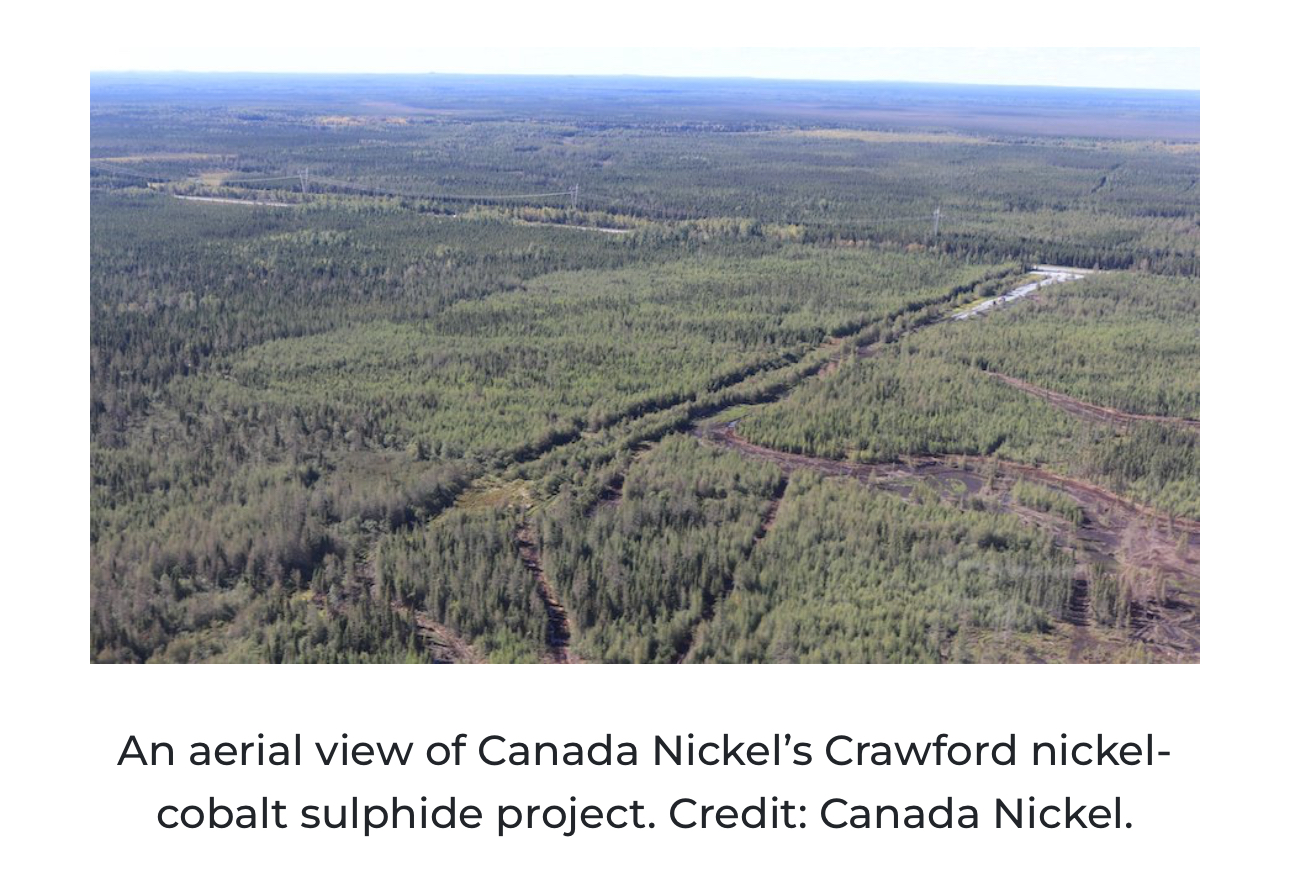
The new regulatory system “represents a significant step forward in how Ontario advances critical mineral developments,” said Canada Nickel (TSXV: CNC) CEO Mark Selby, whose company is looking to develop several properties near the city of Timmins, including the flagship Crawford project(주력 프로젝트인 Crawford 프로젝트).
“By creating a single, coordinated approval process, Ontario is strengthening certainty and predictability for responsible projects like Crawford, which was developed from the outset with Indigenous co-development and environmental innovation at its core,” he added.
Avalon Advanced Materials (TSX: AVL) CEO Scott Monteith, whose company wants to build a lithium refinery in Thunder Bay, echoed Selby’s enthusiasm. The new framework “is a critical step forward for Ontario’s metals and mining sector,” Monteith said in a statement. “For Avalon and our Lake Superior lithium refinery in Thunder Bay, this streamlined(간소화된) approach provides the clarity and confidence needed to move efficiently from development to production. It’s a strong signal that Ontario is serious about leading in the global energy transition.”
'배터리🔋' 카테고리의 다른 글
| [코발트] DRC, 수출물량 미이행 기업의 쿼터 박탈 방침 (0) | 2025.10.28 |
|---|---|
| [코발트] DRC, 기업별 3년치 실적 반영 연간 코발트 쿼터 배정 계획 (0) | 2025.10.20 |
| [니켈] VALE, 퀘벡 황산니켈 공장 건설 계획 철회(3,300억원 규모) (0) | 2025.10.18 |
| [양극재] 포스코퓨처엠·GM 캐나다 양극재 공장 2단계 증설 '속도조절' (0) | 2025.10.18 |
| [니켈] 인니 IMIP서 화재 발생…근로자 3명 경상 (0) | 2025.10.18 |


